Saturday, 21 November 2009

Yamaha Motorcycles - Dealers, Clubs, Owners Sites, Parts Pictures


1. Staintune Yamaha Exhausts (Featured)
Stainless exhaust systems and mufflers for FJR1300, R1, R6, TDM, TT600, WR and many more Yamaha motorcycles.
More Info....

2. KEDO - Performance Products
"YAMAHA SR/TT/XT/XTZ, WR/YZ, TDM/TRX sowie SUZUKI DL- und SV-Modelle."
More Info....


4. Thumper Stuff
Components for YAMAHA SR, XT, TT500, SRX, & XS650 TWIN HONDA FT500 & GB500 Snohomish, Washington
More Info....


6. Yamaha Motorcycle Information
Yamaha motorcycle images and specifications - data from mid sixties to current models, including trailbikes, commuter, touring and sports bikes.
More Info....

7. Yamaha Parts Catalog
Yamaha Motor Corportation, U.S.A. Parts Catalog
More Info....


$5,100.00
$635.00
$475.00
$4,327.00
$800.00
Harley-Davidson 1945 Vintage Harley Davidson
US $7,200.00 (1 Bid)
End Date: Sunday Nov-22-2009 7:48:08 PST
Bid now | Add to watch list

Other Makes : 250 Enduro Ossa Motorcycle vintage collectible rare 250 enduro
US $475.00 (20 Bids)
End Date: Sunday Nov-22-2009 10:59:12 PST
Bid now | Add to watch list

Cushman : - Cushman Circa 1958 Eagle Rare collectible vintage
US $600.00 (7 Bids)
End Date: Sunday Nov-22-2009 11:45:00 PST
Bid now | Add to watch list

Honda : Honda CX500 1979 CX500 V-twin Vintage
US $787.00 (9 Bids)
End Date: Sunday Nov-22-2009 12:15:49 PST
Buy It Now for only: US $1,800.00
Bid now | Buy it now | Add to watch list

2009 Yamaha FJR1300 Pictures and Informition

2009 Yamaha FJR1300
2009 Yamaha FJR1300A
MSRP: $14,499 (ABS Standard)
Horsepower: 123.2 hp @ 7900 rpm
Torque: 87.2 lb-ft @ 6800 rpm
Weight: 664 lbs Range: 262 miles
The Yamaha FJR1300 carved out a strong position in the sport-touring market with its US debut in 2003. Since then, Motorcycle USA has declared it the head of the ST class on two separate occasions (2004 and 2008), with one runner up position (2006). Sourcing sportbike power from its Inline Four, the high-performance handling has been the true distinguishing mark of the FJR and the reason it enters this comparison as reigning champion.

In 2009, handling remains the FJR’s forte and the area where it overtook the Kawasaki for a slim second-place result. With a 26-degree rake and 60.8-inch wheelbase the Yamaha turns quick, though the same is said of the Sprint and BMW. However, the Yamaha delivers unmatched confidence once on its side, tracking through a line with remarkable stability.

Ensuring riders can further refine the front end feel, the 43mm Soqi fork offers the most adjustment of any in our test, with preload, compression and rebound settings (along with convenient knob adjusters like the Kawasaki). The rear shock provides rebound too, a two-position lever making quick preload settings for soft and hard.

2009 Yamaha FJR1300
The Yamaha FJR1300 delivers loads of confidence in the corners, with a stable feel.
Based off riding impressions alone, the Yamaha curb weight of 664 lbs seems improbable. While it’s nowhere near the lightweight Triumph, portly is the last description we would affix to the Yamaha. Somehow it manages to feel both narrow and light – certainly far lighter than the 20-lb difference measured on our scales when compared with the Kawasaki. A closer inspection of the weight chart reveals another surprise, with the 331.5 front end weight the heaviest of the test – nine pounds heavier than the Kawasaki and contradiction of how it feels. On the other hand, the Yamaha’s 331.5 front/332.5 rear is the most balanced weight distribution of the bikes. What role that plays in the Yamaha’s stability and sure-footed feel, we can’t say, except that all riders agreed the Yamaha does parlay supreme confidence from the road.

As mentioned prior, all the four-cylinder bikes exhibit strong brakes and the Yamaha’s dual four-piston Nissin/320mm disc fronts and single two-piston/282mm disc rear are no exception. ABS now comes standard on the FJR along with its Unified Braking System – a linked configuration that activates six of the eight front pistons when squeezing the front
2009 Yamaha FJR1300
The Yamaha FJR places second due, in part, to its motor not delivering quite the same performance as its rivals.
lever, while dabbing the rear pedal activates the two rear piston and remaining two up front. While lever feel up front is not as crisp as some, it delivers one-finger stopping power. Combining the rear and front together and abrupt stops come easy. The ABS also impresses, deemed one of the least intrusive by our testers.

Pull an average rider off the street, stick him on the Yamaha and they’d rave about the spectacular 1298cc DOHC 16-valve Inline Four. Keeping company with the Kawasaki and new Beemer, however, the FJR mill feels more plain – if it’s possible for 123 horsepower and 87 lb-ft of torque at the rear wheel to feel plain. Yet while the Yamaha gives up peak numbers and feels less spry at the controls, it still sports a pleasing on-road performance.

The Yamaha’s power builds down low with a smooth delivery. However, get the tach wound up to about 6 grand, rip on the throttle and the word “plain” blurs right out of mind, along with the roadside scenery. One consistent gripe with the Yamaha’s engine was buzziness around 4K, but as a complete package the Yamaha’s motor feels manageable without being too vanilla.

2009 Yamaha FJR1300
The Yamaha can go the distance with the longest range of any mount in our S-T test fleet at 262 miles with its 6.6 gallon tank.
One quirk we didn’t enjoy on the previous FJR was its stiff clutch pull. For 2009 Yamaha promised reduced lever pressure and it does feel lighter than remembered, but tester riders split on the overall transmission. The five-speed gearbox is smooth enough, though the shaft drive judged clunkier than the Kawasaki. Interestingly, while some riders whined about the lack of a sixth-gear overdrive, the wide fifth gear of the Yamaha provides one of the most relaxed 75 mph cruising rpms.

The Yamaha’s 262-mile range bolsters its touring credentials, the top range of our testing field yielded from an observed 40 mpg efficiency and the largest fuel tank at 6.6 gallons. The upright riding position feels natural, with the seat plush without being too spongy, and both the handlebar and seat are adjustable - the seat height ranging from 31.69 to 32.48 inches.

2009 Sport-Touring fuel specs.
In wind protection, the Yamaha’s adjustable screen rates second to only the BMW. And while some pointed out that unlike the Kawi and BMW it returns back to the lowest position after restarting the bike, come on folks it takes two seconds and your left thumb to dial it in with the left handlebar switch.

Instrumentation includes a left-side tach, with speedo placed directly in the center. A right side LCD displays electronic fuel and temperature gauges, dual trips, a clock and other information accessed by a button mounted in the display area. Notably the Yamaha reads ambient air temperature, with the BMW the only other ride to offer such information. Some found the Yamaha instruments top-line, others less impressed, and riders did complain about the mirrors shaking at high rpm.

The FJR’s no-nonsense bags looked easy to operate, however, we found one bag a cantankerous opener, actually bending our key. They also weren’t quite big enough to accommodate a colleague’s laptop. More patient riders may find better results as our bent key never quite worked the same afterward…

2009 Yamaha FJR1300
Only $200 more than the ABS-equipped Kawasaki, the Yamaha FJR represents probably the best value, a full $6500 less than the BMW K1300GT.
Style-wise the FJR looks fine, with sporty enough lines. Yet, we admit some elements, like the exhaust cans and faring logo verge on the dated. A minor styling redesign might be in order soon, though FJR fans will surely go at our throats for making such suggestions.

At $14,499 the FJR is a mere 200 clams more than the Concours, but a whopping $6500 less than the BMW we tested. Our rudimentary math skills compute that to a 45% price premium! The Yamaha is far from 45% less a bike than the BMW, that’s for sure.

That said, in its fourth appearance, we must admit the FJR’s luster shines a little less bright than we remember. But while it loses its place atop the sport-touring pecking order by our latest measure, it’s still one of the best ST mounts on the market. For those who place value over pure performance, the Yamaha remains the ST of choice.

2010 Yamaha Motorcycles

The Japanese company was well known for its musical instruments, but in 1955 it began producing motorcycles. It began with simple and inexpensive machines but has grown to its position as a powersports powerhouse, offering some of the best sportbikes, cruisers and off-road bikes on the market. It ranks second only to Honda as the leader among Japanese manufacturers.

yamaha motorcycles
Great Yamaha motorcycle

yamaha xt
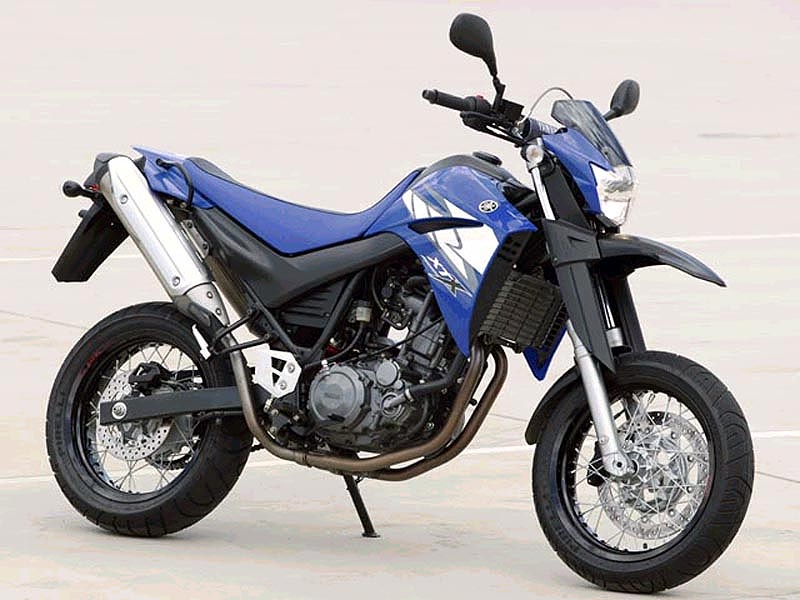
Yamaha xt 660x

yamaha 600
Classic Yamaha 600

Yamaha moto
Cool Yamaha tuning moto

Yamaha 250

Yamaha Fazer 250 CC
yamaha 125Yamaha YZF-R125 2008


yamaha

Friday, 13 November 2009

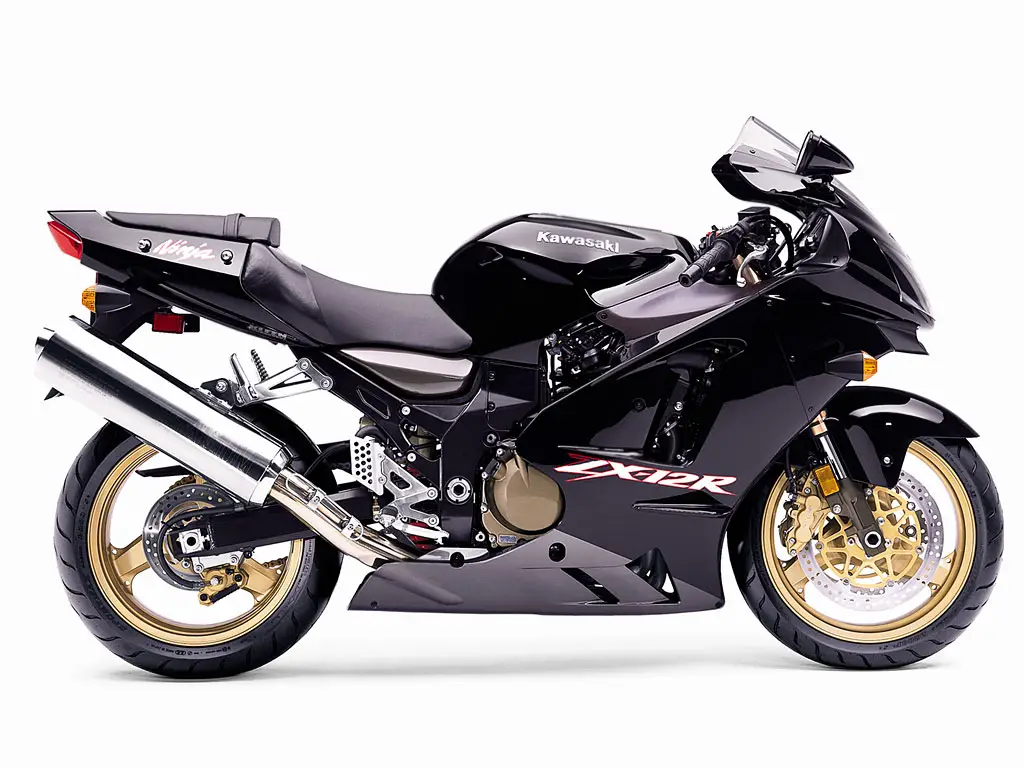
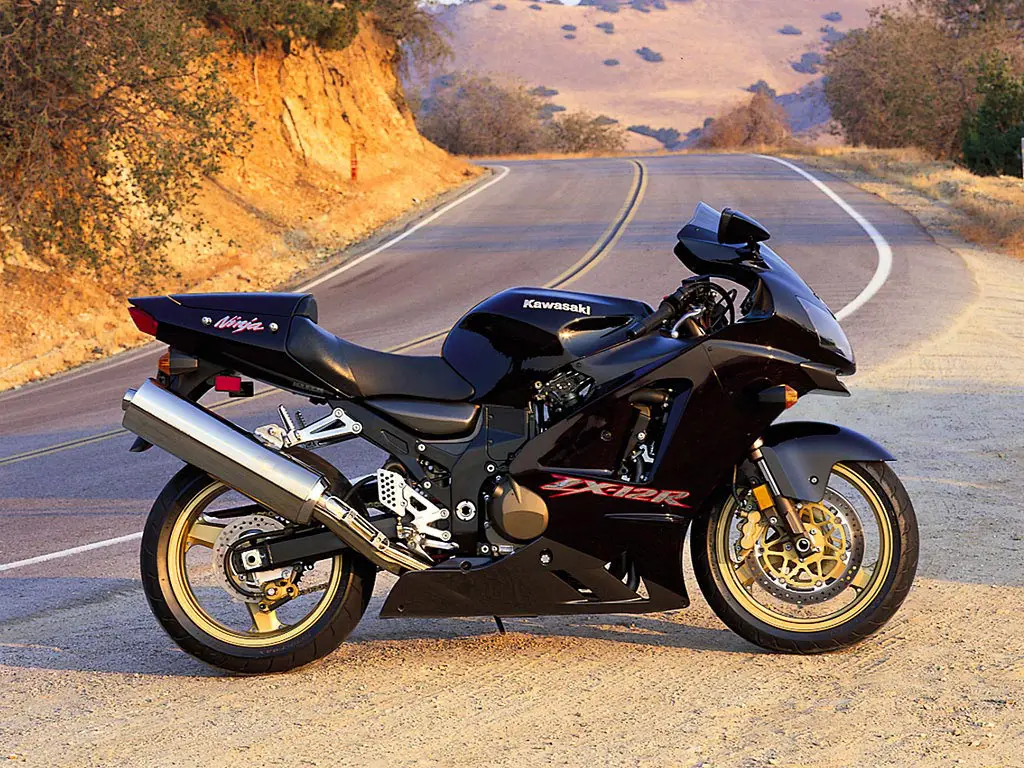
2003 Kawasaki Ninja ZX-12R

click photo to enlarge.

It makes a great desktop image.

2003 Kawasaki Ninja ZX-12R

2003 Kawasaki Ninja ZX-12R

• 2003 Kawasaki Ninja ZX-12R
.

The Ultimate Sportbike.

Apex straffing fanatics roam the hills and the valleys. They’re creatures of power, intelligence and skill, and all before them flee or cower in submission. Their bike of choice is the Ninja® ZX-12R, quite simply the strongest and most advanced Kawasaki sportbike ever.

Cycle World in 2002 summed it up nicely: “If top speed is your bottom line, Kawasaki rules!”

The ZX-12R begins with a rigid monocoque aluminum backbone that wraps closely around the huge 1,199cc digitally fuel-injected engine for unparalleled handling and cornering agility. For horsepower junkies, the muscular DOHC mill is built to satisfy your primal urges for hard acceleration. And adjustable suspension components straight off the top shelf deliver impeccable handling and grown-up ergonomics ensure a comfortable ride, even in predator status. Did we mention the ZX-12R is undefeated in Formula Superbike and a major contender in Streetbike Shootout in AMA ProStar drag racing?

So do you really need a Ninja ZX-12R?

Yeah.

Features:

• High-volume, efficient Twin Ram Air intake system with turbulence reducing air flow separators.

• Four-cylinder, chrome composite plated linerless aluminum block allows a very compact engine width for the 1,199cc displacement while retaining tremendous strength for the high power output.

• Compact 16-valve cylinder head features a narrow 25-degree included valve angle and a high 12.2:1 compression ratio to increase power output.

• Special lightweight, yet strong, VX thin-wire valve springs provide precise high-speed valve control.

• Heat-treated chrome-moly con rods connect to a strong, precisely weighted crankshaft for stronger low- and mid-range performance.

• Large 19 litre (4.2 gallon) fuel tank with electric fuel pump is located beneath the seat, resulting in a lower centre of gravity and improved mass centralization.

• Oval-shaped throttle pulley and simplified fuel pump with built-in regulator help improve engine response.

• Magnesium alloy covers for the cylinder head, clutch and alternator reduce overall weight.

• Four 46mm fuel-injected throttle bodies with four precisely angled jets aimed directly at the intake valves.

• The Engine Management Module continuously monitors engine and atmospheric data to independently control fuel injection and ignition for each cylinder.

• World’s first production monocoque backbone aluminum frame which
eliminates the need for twin side spars wrapping around the engine, keeping the ZX-12R surprisingly narrow.

• Piggy-back reservoir rear shock with stepless adjustable compression and rebound damping rates.

• Front 43mm inverted cartridge fork with stepless adjustable compression and rebound damping and adjustable spring preload.

• High-performance radial tires mounted to lightweight 17-inch alloy wheels. The ultra-wide 200/50 rear tire mounts to a six-inch wide rim for excellent traction.

• Dual opposed six-piston front callipers grip large 320mm diameter discs while an opposed-piston calliper slows the 230mm single rear disc.

• Instrumentation includes state-of-the-art electronic gauges for the speedometer and tachometer plus a full complement of warning lights and readouts from the digital display.

Specifications:
Ninja ZX-12R
Engine type 4-stroke, liquid-cooled In-Line Four
Displacement 1,199cc
Bore x stroke 83 x 55.4mm
Compression Ratio 12.2:1
Valve system DOHC, 16 valves
Fuel system Digital fuel injection with four 46mm throttle bodies
Ignition Digital
Starting Electric
Transmission 6-speed with Positive Neutral Finder
Frame type Monocoque, pressed aluminum with detachable rear sub-frame
Rake/trail 23.5°/98 mm (3.85 inches)
Suspension, front 43mm inverted cartridge fork with adjustable preload and stepless compression and rebound damping
Suspension, rear Bottom-Link UNI-TRAK® with remote-reservoir, gas-charged shock, adjustable ride-height, spring preload, stepless compression and rebound damping
Tires, front, rear Tubeless radial; 120/70-ZR17; 200/50-ZR17
Brakes, front Dual 320mm semi-floating discs with dual 6-piston calipers
Brakes, rear Disc with opposed-piston caliper
Wheelbase 1450 mm (57.1 inches)
Seat height 820 mm (32.3 inches)
Fuel capacity 19 litres (4.2 gallons)
Dry weight 216 kg (463 pounds)
Colours Pearl Mystic Black/Metallic Cressent Gold or Metallic Gray Stone or Lime Green
GTPP available 24 or 36 months

Specifications are subject to change without notice, in accordance with national regulation and legislations.

Sunday, 8 November 2009

Motorcycle Towing Cradles

Motorcycle Towing Cradles

If you're just looking to bring one motorcycle along for a ride behind your vehicle, you might not want to invest in a trailer and all the maintenance that goes with its multiple wheels. Luckily, there are other towing options for motorcycle owners who don't want to burn quite that much rubber on the highway.
motorcycle towing cradle
Photo courtesy James Ansell

motorcycle towing cradle
motorcycle trailer
Motorcycle towing cradles, such as the Ansell Tow Dolly, allow you to tow your bike without a trailer.

Motorcycle towing cradles (also known as motorcycle trailer hitch dollies and receiver hitch motorcycle caddies) allow you to hook the front wheel of your bike to the vehicle and let the back wheel roll freely behind. These cradles consist of a wheel cradle or chock that locks directly into the towing vehicle's hitch tube. All you have to do is lock the front wheel into this contraption and, in some cases, further secure the bike with towing straps.

If you're driving an RV cross-country, you might want to keep a bike around. After all, what if the cannibalistic mutants from "The Hills Have Eyes" attack you and your family? How many terrible horror films might we have been spared if someone had thought to strap a dirt bike to the back of that camper? RV motorcycle lifts attach to the trailer hitch and add just enough of a ledge against the rear of the vehicle to accommodate one or two horizontally mounted bikes. The motorcycles typically lock into place with the aid of straps, wheel chocks, cradles or rails.

Swivel wheel or fifth wheel motorcycle trailers take this same principle and extend the ledge out even farther -- so far, in fact, that a single, swiveling wheel mount is required to support the trailer's weight. This ledge allows RV owners to mount one or more bikes vertically behind the vehicle. Unlike traditional trailers, you don't hav­e to worry about jackknifing since the trailer is essentially an extension of the vehicle.

In the end, you can spend hundreds or thousands of dollars to haul your bike around. Motorcycle trailers are an excellent way to get out on the highway, without actually getting your bike's motor running.

Explore the links on the next page to learn even more about motorcycles and towing.
//PART 2